
On July 14, the Development and Reform Commissions and Energy Bureaus of Sichuan and Chongqing officially signed the “Joint Cooperation Agreement on Promoting High-Quality Integrated Energy Development in the Chengdu-Chongqing Economic Circle” in Chongqing. This marks the first formal cooperation agreement between the two regions’ energy authorities.
Under the agreement, the two parties will jointly invest approximately 990 billion RMB to advance 20 major energy projects, covering areas such as energy infrastructure, supply, and storage and peak-shaving capacity.
The initiative aims to establish a nationally influential demonstration zone for green and efficient energy utilization and a key clean, low-carbon energy production base, providing strong energy support for the Chengdu-Chongqing economic circle. Of the total investment, about 710 billion RMB will be allocated to large-scale natural gas development in the Sichuan Basin, targeting a production capacity of 100 billion cubic meters (approximately 80 million tonnes of oil equivalent). This milestone would further break national records for gas production, with over 400 billion RMB to be invested during the 14th Five-Year Plan period (2021–2025) alone.
Building a 100-Billion-Cubic-Meter Natural Gas Production Base — Creating a “Gas Daqing”
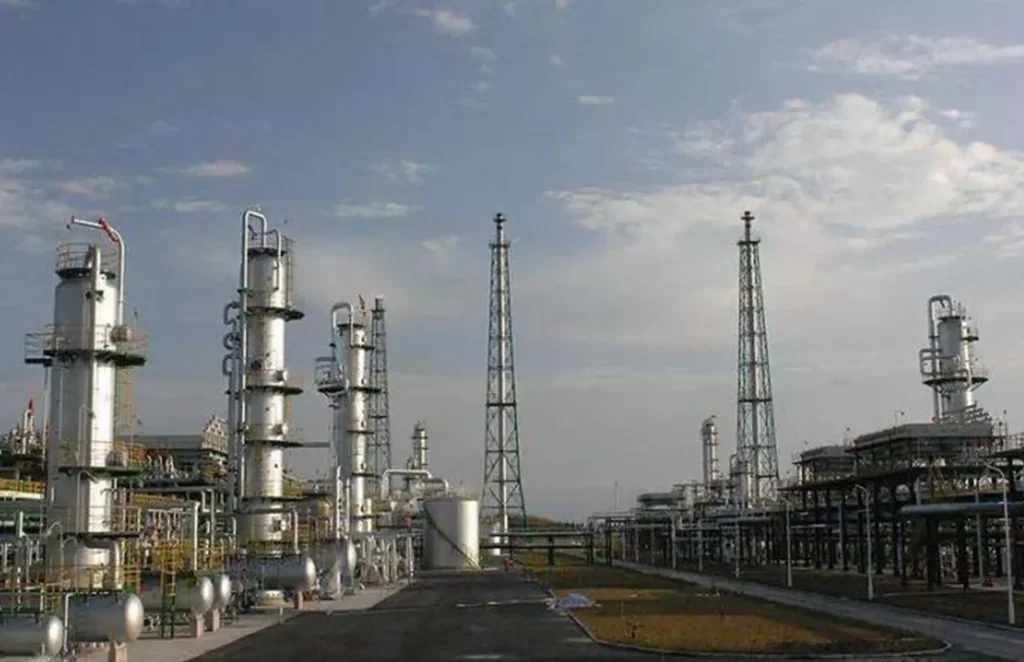
Sichuan and Chongqing boast rich natural gas resources, with the Sichuan Basin currently supplying about one-third of China’s total gas output. In 2022, China’s National Energy Administration initiated a special development plan to construct a 100 bcm natural gas capacity base in the basin. The plan is now being realized through this bilateral cooperation.
The agreement outlines a coordinated approach to natural gas exploration and development, leveraging the national shale gas demonstration zones in Changning–Weiyuan and Fuling as strategic anchors. The joint goal is to build the Sichuan-Chongqing 100 bcm gas base and achieve, by 2025, the equivalent production scale of China’s Daqing Oilfield in gas output.
According to a national assessment conducted during the 13th Five-Year Plan by the Ministry of Natural Resources, the Sichuan Basin holds proven gas reserves of 3.73 trillion cubic meters, with a total estimated resource of 38.84 trillion cubic meters—equivalent to the combined total of the Ordos, Tarim, and Qaidam basins. However, the proven reserve rate is only 9.6%, making it the most promising gas exploration basin in China.
“The Sichuan Basin is currently the largest natural gas production base in China,” said Deng Chao, Deputy Director of the Sichuan Provincial Energy Bureau. He noted that the construction of the 100 bcm capacity base would solidify Sichuan-Chongqing’s national leadership in gas output, aiming to reach 63 bcm of natural gas (including shale gas) by 2025, and establishing China’s first 100 bcm-class gas base by 2035.
The project’s implementation period spans 2020–2035, with 710 billion RMB in total investment, including 270 billion RMB during the 14th Five-Year Plan. Development will focus on:
- Conventional gas fields in central Sichuan (e.g., Moxi–Longwangmiao, Gaoshiti–Moxi Sinian formations),
- High-sulfur fields in northeastern Sichuan, and
- Shale gas resources in Fuling and Changning–Weiyuan.
Creating a 10-Billion-Cubic-Meter-Class Gas Storage and Peak-Shaving Hub
The agreement also emphasizes the development of natural gas storage infrastructure.
Key underground gas storage facilities are planned at Xiangguosi, Tongluoxia, Huangcaoxia, and Wanshunchang, forming a gas storage and peak-shaving hub in Southwest China. “Once completed, the storage cluster will help alleviate winter gas shortages in the Sichuan-Chongqing region,” said Yang Shixing.
On the petroleum side, the agreement outlines the development of:
- CNAF Southwest Strategic Oil Storage Base,
- National Aviation Oil Reserve, and
- The Lanzhou–Chengdu–Chongqing (Lanchengyu) refined oil pipeline expansion.
The CNAF base alone will see an investment of over 10 billion RMB, with plans for:
- A 620,000 m³ oil storage facility,
- Five oil unloading berths, and
- A pipeline from Chongqing Changshou to Chengdu Tianfu International Airport.
For coal, both sides will seek national support to develop strategic coal reserves at key consumption areas and transport corridors. Sichuan’s Gaoxing Coal Reserve Base, with a planned capacity of 1.2 million tonnes, is expected to be completed by 2023.
Promoting Integrated Energy Infrastructure and Clean Energy Utilization
The agreement also includes:
- Joint planning of EV charging infrastructure across the Chengdu-Chongqing region,
- Coordinated shore power retrofitting at Yangtze River ports,
- Efficient LNG utilization initiatives.
In terms of energy planning and policy coordination, Sichuan and Chongqing will jointly advocate for:
- The inclusion of major energy integration platforms, projects, and policies in the national planning framework for the Chengdu-Chongqing Economic Circle,
- Designation as a national comprehensive energy reform pilot zone,
- Further development of Sichuan as a clean energy demonstration province, and
- Support for Chongqing’s efforts to build a green and efficient energy utilization demonstration zone.

 Chinese
  English